COLERE · Field Note
If AGI Is Here, Where Is the Kettle?
On Astra, the AGI era, and what still refuses to sit on the table
This week I tried to publish a short essay about AGI.
The draft was ready. The argument was clear enough. What was not ready was the publishing stack: login timeouts, image uploads that would not take, a cover that would not set, a button that said “save” while nothing felt saved. Somewhere in the same week, OpenAI’s president welcomed the world to the AGI era, and Nvidia’s CEO congratulated everyone that AGI had arrived.
I am not complaining about software. I am noticing a gap. A model can be described as general intelligence, and still the ordinary act of placing a piece of writing into public life can feel like wrestling a machine that does not care whether the text ever reaches a reader. If that is the week AGI arrived, it arrived oddly—loud at the top, stubborn at the bottom.
What the week argued about
The English conversation split, as it usually does, into familiar camps.
One camp declared the era. Greg Brockman closed a briefing with “Welcome to the AGI era.” Jensen Huang wrote that AGI had arrived, tracing a four-year arc from ChatGPT to Astra. The language was ceremonial: a threshold crossed, a chapter titled.
A second camp refused the word. Gary Marcus and others asked for definitions before victory speeches. If you cannot say what AGI is, they argued, you cannot say it is here. Declaring it by corporate fiat muddies a scientific question.
A third camp stayed with measurement. Independent indexes put Astra roughly level with its predecessor on general intelligence while costing more. On ARC-AGI-3, a near-perfect score depended on a particular harness; under a standard setup the number was far lower. François Chollet and the ARC Prize were careful: saturating a benchmark is not proof of AGI. The jump can be real without being a finish line.
A fourth camp was pragmatic. For schools, companies, and governments, the philosophical vote may matter less than the functional one. Systems that institutions treat as AGI can rearrange work before philosophers agree.
Podcasts and YouTube rounds—Big Technology, All-In, and the rest—mostly asked: Is it AGI? Is OpenAI back? Is it more useful? Safer? Controllable?
All of those questions are legitimate. None of them is the one I keep returning to.
The question underneath
The useful distinction is not whether capability has advanced. It has. Astra and its peers can do work that would have looked like science fiction a few years ago. The useful distinction is between two kinds of arrival.
The first arrival is technical. Labs announce it with scores, demos, and press briefings. Capital markets hear it as a signal. Engineers feel it as a new ceiling that keeps lifting.
The second arrival is cultural. It happens when a capability becomes a form of life—something a household can live with, something a street can absorb, something that fits beside breakfast without demanding that breakfast become a product demo.
Capability can arrive by announcement.
A form of life arrives only by use.
This is why the week’s fatigue felt so precise. The first arrival was being celebrated in conference rooms and on timelines. The second was nowhere near ready—not in my publishing tools, and not, I suspect, in most ordinary days.
A kettle, not a generator
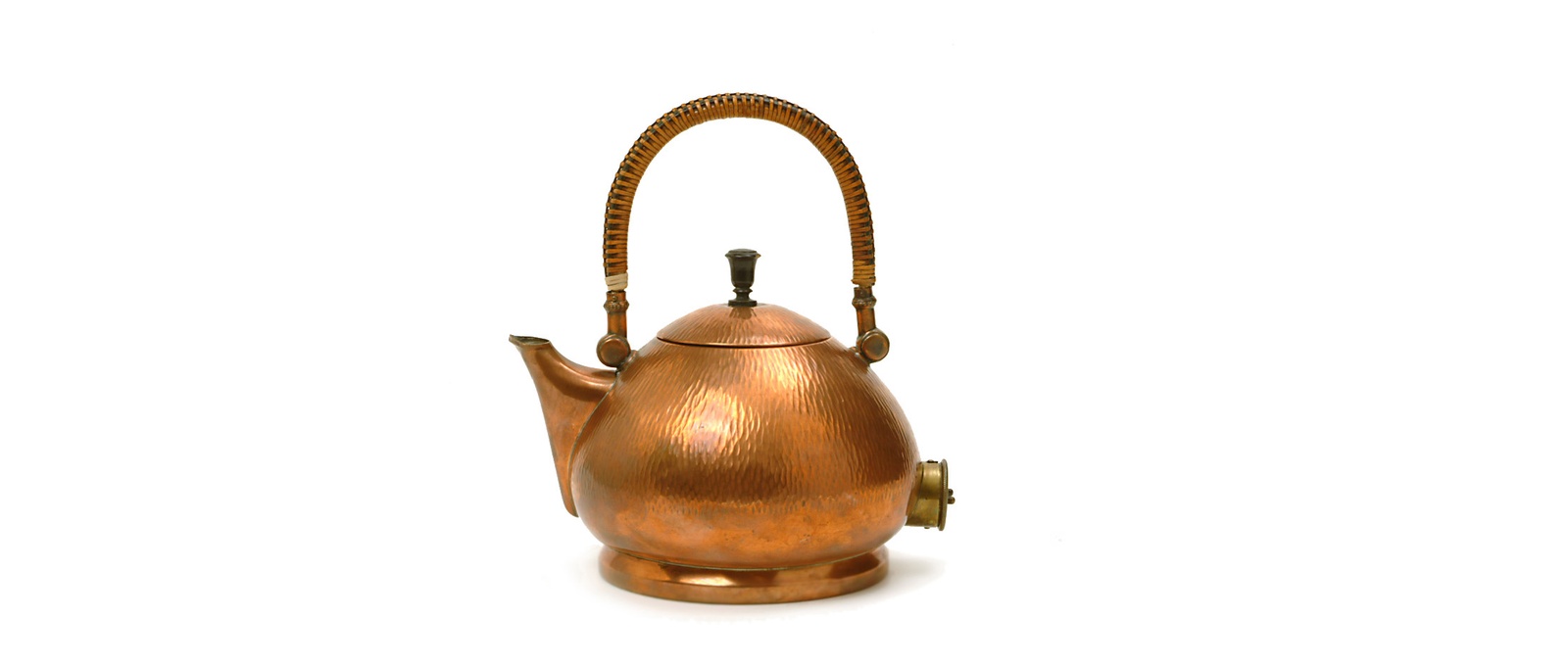
In 1920, the German architect and designer Peter Behrens wrote that technical progress had lifted material life to an unprecedented height—yet what had been raised was material life, not cultural life. He had spent years at AEG designing both vast turbine halls and small domestic objects. He knew the difference between installing power and making power livable.
Electricity did not enter European homes because generators got larger. It entered when objects—lamps, fans, a kettle on a table—turned an invisible force into something people could touch without fear. The first arrival was the grid. The second was the vessel that could sit among cups and conversation.
We are repeating the pattern with a new force. Models grow. Clusters expand. Benchmarks refresh. And for many people, “frontier intelligence” still collapses into a glowing input box, a subscription, and a slightly more anxious workday. Abundance of tokens has not automatically become abundance of life.
OpenAI’s own definition of AGI has long leaned toward systems that outperform humans at most economically valuable work. Even on those terms, the public evidence remains contested. But even if we granted the label for a day, the Behrens problem would remain: economic value is not the same as a shared form of living. A system can win at work and still leave the kitchen colder.
At COLERE we put it more quietly in our manifesto: more output is not the same as a fuller life.
What not to do with the announcement
I do not want to stand against engineers. Behrens did not ask factories to stop. He asked for form—for a language of living that industry alone would not invent.
The division of labor still holds. Builders extend the boundary of what machines can do. The rest of us decide how that capacity sits beside attention, friendship, sleep, and the right to spend an afternoon without proving its usefulness.
Before adopting the next tool because it wears a frontier badge, a simple life-test still helps:
Does it belong in ordinary rooms without turning every room into a dashboard?
Does the time it frees become room to live, or only room to produce more?
Can you explain to someone you love—without jargon—why it deserves a place in your shared day?
If the answers are no, the object is still unfinished, no matter high the score.
I will keep watching the benchmarks. They matter. Harnesses matter. Safety matters. Whether Brockman or Huang is “right” about the word AGI will be argued for years.
But I am less interested in winning that argument than in a quieter one.
If AGI is here, where is the kettle?
Not the metaphor alone—the actual work of giving a powerful, half-strange force a shape people can live with. That work will not be finished in a launch blog. It will be finished, if at all, by many hands: designers, teachers, families, small institutions, and people who refuse to let their days be colonized by a feed that never sleeps.
Capability arrived on a briefing slide.
Life is still waiting for a place at the table.